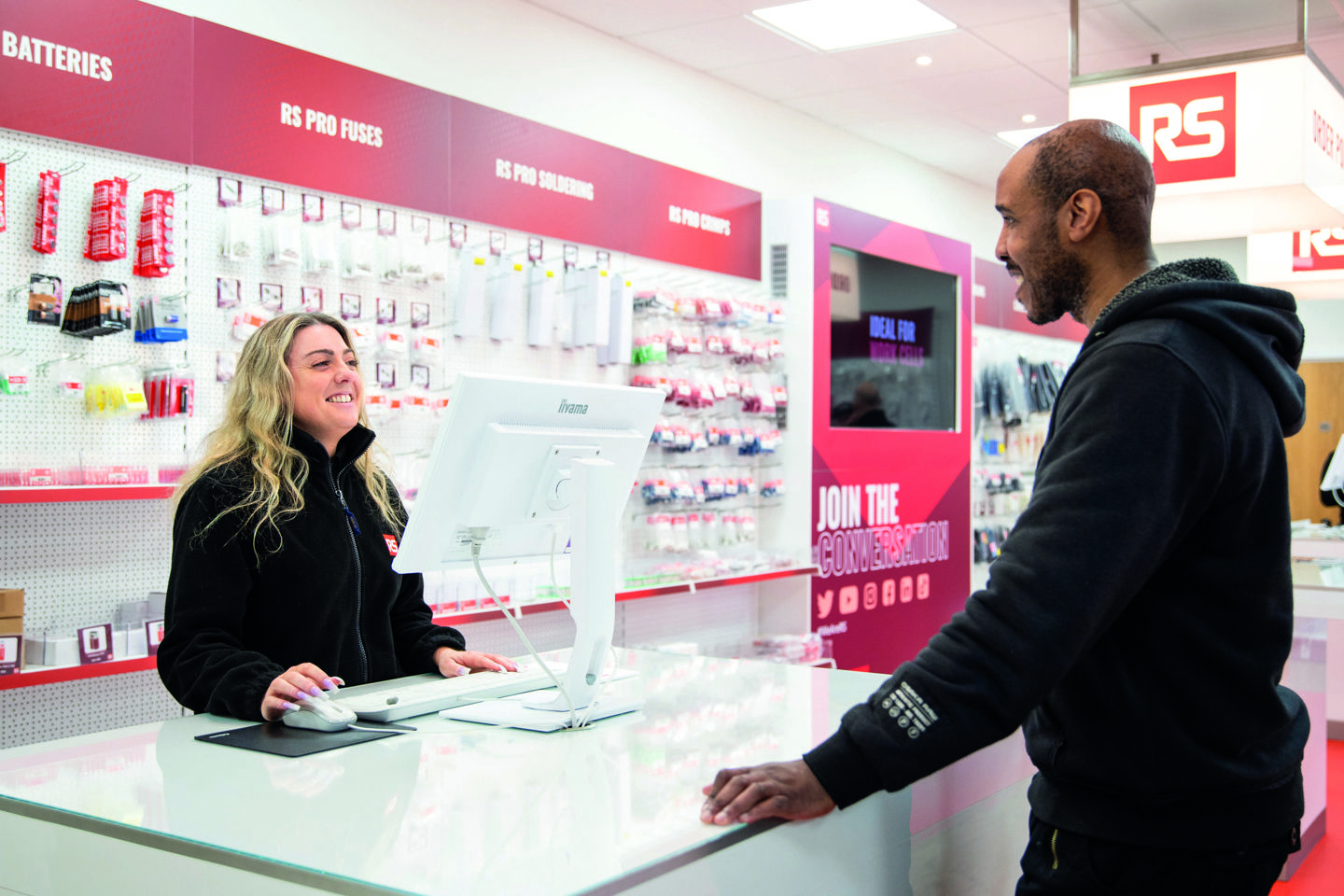
As we move closer to our 2030 ESG action plan ambitions, RS has shown that meaningful decarbonisation is achievable at scale. Across the UK-based RS Local network, teams have demonstrated that significant emissions reductions are achievable, leveraging smart building improvements, day-to-day operational changes, and strong local partnerships to overcome a diverse range of site-specific challenges and opportunities. As a result, the RS Local network has halved its emissions in just three years.
More than just reducing carbon, these efforts have helped lower operating costs, build business resilience, and demonstrate how sustainability can create commercial value while supporting customers on their own journeys to net zero.
A tailored decarbonisation model
We have adopted a flexible, data-driven approach to decarbonisation across the RS Local UK branch network, supporting our Climate Transition Plan to achieve net zero in direct operations by 2030. RS Locals are 16 customer-facing trade counter sites, providing direct access to components and a curated range of Better World products that support more sustainable procurement choices.
With sites varying in size, layout, and energy use, we knew that a one-size-fits-all approach would not deliver the carbon reductions needed to meet our ambition to reduce direct emissions by 75% by 2029/30. We had to address a range of challenges across the network, from ageing infrastructure to reliance on fossil fuels for heating and fleet operations, while continuing to serve customers in busy, high-traffic environments.
In response, we introduced a bottom-up decarbonisation model that empowers local teams to make sustainability part of everyday operations and develop solutions tailored to their sites. A centralised Energy Management Dashboard helps site leads identify opportunities, prioritise projects, and track progress against a shared roadmap. This is supported by our Net Zero Working Group, which brings together site leaders from across the Group through monthly knowledge-sharing sessions to share ideas, collaborate on projects, and accelerate progress (learn more about their work here).
"Decarbonising our UK RS Local branch network is a true one-team effort. By developing innovative local solutions that contribute to our global Climate Transition Plan, we've halved branch emissions while improving efficiency - helping us deliver brilliantly for customers today and progressing our shared net zero ambitions for the future." - Oliver Bradley, Head of ESG Data & Sustainability Reporting, RS Group
Targeted on-site execution
Our approach combines practical changes in everyday operations with targeted upgrades that support wider Group priorities. Rather than applying the same solution everywhere, we encourage site leads to follow a shared framework while adapting actions to their own operational needs. This approach has led to a mix of simple and innovative improvements, from optimising heating schedules to installing destratification fans, LED lighting, and upgraded boilers.
Key priorities include moving to renewable-powered heating and cooling, electrifying a 21-vehicle cross-network fleet, upgrading hot water systems, and improving overall building efficiency. Backed by a shared annual investment of £2m across all Group net zero projects, this approach focuses delivers quick wins today while creating clear pathways for longer-term decarbonisation.
Key performance highlights
-
67% reduction in direct emissions since 2019/20, with RS Local branch emissions halved in three years (>200 tCO2e saved)
-
44% improvement in energy intensity (since 2019/20)
-
54% reduction in gas-related emissions through electrification and efficiency over the last three years
-
30% reduction in diesel use, with 19 EVs and 1 hybrid (of 21 vehicles) and 15 branches equipped with EV charging
"What’s made the difference is giving our branches the flexibility to find solutions that work for their sites, while staying focused on a shared goal. By working together, we’ve overcome challenges, cut emissions, improved efficiency, and continued delivering the great service our customers rely on every day." - Thomas Adams, RS Local Divisional Manager (North)
Creating business value through decarbonisation
This flexible, locally empowered approach has delivered large-scale, measurable impact for both the RS Local network and the Group. By targeting the most emissions-intensive sites and focusing on high-impact interventions, we have accelerated progress towards our 2030 ambition and embedded decarbonisation into our operations.
Beyond emissions reductions, this has delivered broader business benefits. Energy efficiency measures have lowered operating costs and strengthened resilience, supported by on-site solar adoption and reduced exposure to volatile fossil fuel markets. Workplace environments have also improved through better heating, lighting, and temperature control, making our warehouses more comfortable for our people.
Site decarbonisation also strengthens RS’s customer value proposition. By improving our own operational footprint, the business is better positioned to support customers’ net zero ambitions and meet evolving regulatory expectations.
While challenges remain, particularly around emerging technologies and access to cost-effective renewable electricity, we continue to adopt an agile, adaptive approach. Ongoing collaboration across sites, combined with continued investment in EV infrastructure and renewable energy, will ensure sustained progress.
The significant progress of the RS Local decarbonisation strategy demonstrates how a flexible model combining central oversight with local execution can deliver scalable decarbonisation, reduce costs, and build long-term operational resilience.
Find your RS Local branch here.